Most cleaning companies that try Google Ads hit the same wall. The clicks come in, the budget drains, and the phone rings with people asking whether you sell carpet shampoo, whether you are hiring, or whether you can clean a house three states away. The problem is rarely Google Ads itself. It is usually campaign structure, targeting and tracking that were never built around how cleaning customers actually search and book.
I run Google Ads for US local service businesses, including residential and commercial cleaning companies. This guide walks through the setup I use, in the order I build it, so you can check your own account against it.
Why do Google Ads work well for cleaning businesses?
Google Ads work for cleaning businesses because many people search at the exact moment they need a cleaner. Someone typing "move out cleaning near me" or "deep house cleaning [city]" usually has a date in mind and a problem to solve. That is very different from scrolling social media, where you have to create the demand first.
The catch is that cleaning is a crowded local category. Franchises, marketplaces and every independent cleaner in your area are bidding on the same core terms. You win by being more specific than they are: tighter geography, service-level ad groups, cleaner keyword lists and conversion data that tells Google which clicks actually turn into booked jobs.
How should you structure a cleaning business Google Ads account?
Structure the account by service, not by one big "cleaning" bucket. Each service has a different searcher, a different price point and often a different landing page, so each deserves its own ad group with its own keywords and ads.
A simple structure that works for most residential cleaning companies:
| Campaign | Ad group | Example keywords |
|---|---|---|
| Residential cleaning | House cleaning | house cleaning service, home cleaners [city] |
| Residential cleaning | Deep cleaning | deep cleaning service, one time deep clean |
| Residential cleaning | Move in / move out | move out cleaning, end of lease cleaning |
| Residential cleaning | Recurring cleaning | weekly house cleaning, biweekly cleaning service |
| Commercial cleaning | Office cleaning | office cleaning company, janitorial services [city] |
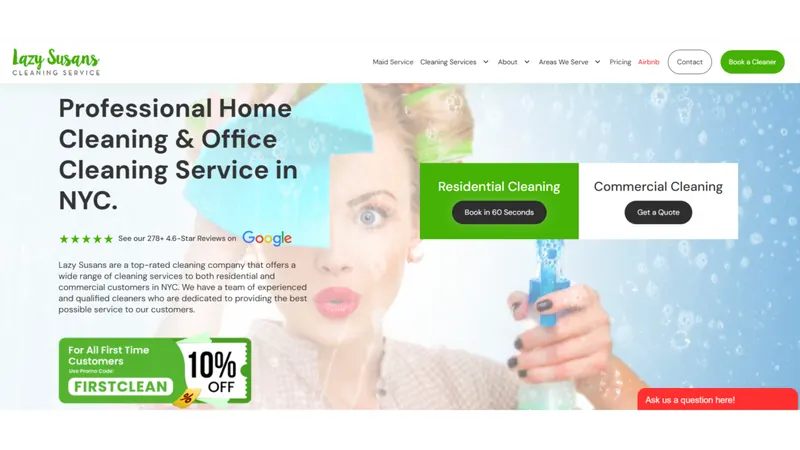
For Lazy Susan's Cleaning Service, I grouped keywords by house cleaning, apartment cleaning, move-in/move-out cleaning and recurring cleaning, so every search matched an ad that spoke to that exact job.
Which keywords should cleaning companies bid on?
Bid on keywords that combine a specific service with a buying signal or a location. Those searches carry the clearest intent to book.
Strong keyword patterns:
- Service + location: "house cleaning Plano", "office cleaning Brooklyn"
- Service + near me: "move out cleaning near me"
- Service + buying words: "book a house cleaner", "cleaning service quote", "same day cleaning service"
- Specific job types: "post construction cleaning", "Airbnb turnover cleaning" (only if you actually offer them)
Start your core terms on phrase and exact match while the account collects conversion data.
Equally important is what you block. Searches for cleaning jobs, cleaning products, DIY tips and cleaning courses are common in this category. I cover the full list in my guide to negative keywords for local service businesses.
How do you target only your service area?
Target the specific cities, ZIP codes or radius you actually serve, and set location targeting to reach people in or regularly in those locations rather than people who have only shown interest in them. In current Google Ads, this sits in the campaign's location options; the default "presence or interest" setting is broader and often sends clicks from people who are nowhere near your service area.
A few practical rules:
- List your real service area first. If you would not drive to a job there, do not target it.
- Exclude areas inside your radius that you do not serve, such as a city across a river or a bridge toll you do not want to pay.
- Review the locations report after a couple of weeks and add bid adjustments or exclusions based on where real leads come from.
- Mention the area in ad copy ("Serving Long Island since...") so people outside it self-select out.
What should your ads and landing pages say?
Your ads should answer three questions fast: what you clean, where you clean, and how easy it is to book. Cleaning buyers compare several companies in a few minutes, so vague claims like "best quality service" get skipped.
Ad copy elements that work for cleaning:
- The specific service in the headline ("Move Out Cleaning in Austin")
- Trust signals you can genuinely back up: insured, background-checked staff, satisfaction guarantee, years in business
- A clear call to action: "Get a Free Quote", "Book Online in 60 Seconds"
- Assets (formerly extensions): call asset, sitelinks to each service, callouts for trust points and location assets if your Google Business Profile is linked
The landing page should match the ad. If someone clicks a move-out ad, send them to a move-out page with a short quote form, a click-to-call button and the details people ask about most: what is included, how pricing works and which areas you serve. A homepage that talks about everything converts worse than a page that talks about one thing.
Should cleaning companies use Local Services Ads or Search ads?
Use both if you can, because they do different jobs. Local Services Ads (LSA) are pay-per-lead ads that appear at the top of some local searches with a verification badge. You do not choose keywords; Google matches you based on your business category, job types and service area, and you pay for leads rather than clicks.
Search campaigns are pay-per-click and give you control over keywords, negatives, ad copy, landing pages and bidding. That control is what lets you push specific, profitable services such as move-out or recurring cleaning.
| Local Services Ads | Search campaigns | |
|---|---|---|
| Pricing model | Pay per lead | Pay per click |
| Keyword control | None (job types and service area) | Full, including negatives |
| Landing page | Your LSA profile | Your own website |
| Setup requirements | Business verification and screening | Standard Google Ads account |
| Best for | Calls and messages from local searchers | Specific services and scaling volume |
LSA availability, badges and screening requirements vary by category and country, so check what is currently offered for cleaning in your market before planning around it.
How do you track bookings, not just clicks?
Track the actions that lead to revenue, quote form submissions and phone calls, as primary conversions, and keep softer actions like page scrolls out of your bidding. If Google is told that a button click is a conversion, it will happily find you more button clickers.
The minimum tracking setup for a cleaning business:
- Form submissions tracked on a real success event (a thank-you page or confirmed submit), not on the button click
- Calls from ads using call assets with a Google forwarding number, plus website calls if you show your number on the site
- Enhanced conversions so Google can match more leads to ad clicks using hashed first-party data
- Offline conversion import if you want Google to learn which leads became paying customers
That last step matters more than most owners realise. A form fill from someone who books a weekly clean is worth far more than one from someone who never answers the phone. Sending CRM outcomes back to Google lets Smart Bidding tell those apart. I explain how in my post on offline conversion tracking from your CRM to Google Ads.
What does this look like in a real account?
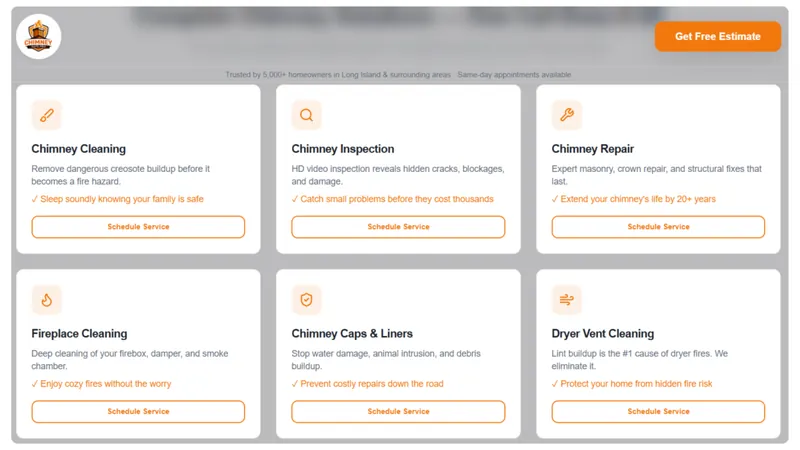
The same principles apply across home services. For Chimney Safe Pro, a Long Island chimney cleaning and inspection company, I focused on high-intent service keywords, strict geo-targeting to their service areas, lead form submissions and inquiries tracked as primary conversions, and negative keywords to filter out DIY, product and informational searches.
For Lazy Susan's Cleaning Service, the work was a service-based keyword structure, campaigns limited to their service areas, lead submission tracking as the primary conversion, ad copy and assets tuned for fast inquiries, and ongoing negative keyword work. In both accounts, the goal was not more traffic. It was more people ready to book.
Final thoughts
Google Ads can be one of the most reliable booking channels for a cleaning business, but only when the account mirrors how your customers search and how your business actually makes money. If you want a second pair of eyes on your setup, you can see how I run Google Ads for cleaning businesses or book a free tracking audit.