When I open a local service business's Google Ads account for the first time, the search terms report usually tells the story within a few minutes. A chimney company paying for "how to clean a chimney yourself". A cleaning company paying for "house cleaning jobs near me". An HVAC contractor paying for "hvac technician salary". Every one of those clicks is a real cost, and none of them was ever going to book a job.
Negative keywords are the simplest fix. They tell Google which searches you do not want to appear for. This guide covers how negative match types actually behave, the categories of negatives almost every local service business needs, and how to manage them without accidentally blocking good leads.
What are negative keywords in Google Ads?
Negative keywords are words or phrases you add to a campaign, ad group or shared list to stop your ads from showing on searches that contain them. If "jobs" is a negative keyword, your ad will not appear for "cleaning jobs in Dallas", even if your regular keywords would otherwise match that search.
They matter more than ever because keyword matching has become looser. Broad match and close variants let Google show your ads for searches it considers related in meaning, which often includes research, employment and DIY queries. Negatives are your main way of drawing the line.
How do negative keyword match types work?
Negative keywords have three match types, broad, phrase and exact, and they behave differently from the positive keyword match types with the same names. The biggest difference is that negative keywords do not automatically cover close variants, synonyms or misspellings.
| Negative match type | Syntax | Blocks a search when... | Example negative | Blocks | Does not block |
|---|---|---|---|---|---|
| Negative broad | cleaning jobs |
All the words appear, in any order | cleaning jobs | jobs for house cleaning | cleaning job (singular) |
| Negative phrase | "cleaning jobs" |
The words appear in that exact order, with other words around them allowed | "cleaning jobs" | part time cleaning jobs | jobs cleaning houses |
| Negative exact | [cleaning jobs] |
The search is exactly those words, nothing more | [cleaning jobs] | cleaning jobs | cleaning jobs near me |
A few practical consequences:
- Add singular and plural forms. "job" and "jobs" are separate negatives. So are "course" and "courses".
- Single-word negative broad is the most powerful. A negative broad "salary" blocks every search containing that word. That is usually what you want for job-related terms.
- Use exact match negatives for surgical blocks. If one specific search wastes money but similar searches convert, a negative exact keyword removes only that one.
Which negative keywords do local service businesses need?
Most local service businesses need negatives in the same handful of categories: jobs, DIY, products, training, places you do not serve and services you do not offer. The exact words differ by industry, but the patterns are consistent.
Job seekers
- jobs, job, hiring, career, careers, employment, salary, wage, indeed, apprenticeship, part time, full time
DIY and how-to searches
- how to, diy, yourself, tutorial, tips, hack, video, youtube
Be careful here. "How much does chimney sweeping cost" contains "how", but it can be a buyer comparing prices. I usually block "how to" as a phrase rather than "how" on its own.
Products, tools and supplies
- supplies, equipment, products, machine, rental, wholesale, amazon, walmart, home depot, for sale
For a cleaning company, "carpet cleaner" is a perfect example of an ambiguous term. It can mean a carpet cleaning service or a carpet cleaning machine. "Carpet cleaner rental" and "best carpet cleaner machine" should be blocked; "carpet cleaner near me" might be a customer.
Training, licensing and starting a business
- course, courses, training, certification, license, school, class, how to start, franchise, business plan, insurance for
Out-of-area locations
Even with good location targeting, people sometimes search for other cities. Add city or state names you clearly do not serve as negatives, especially nearby large cities that share search volume with your area.
Services you do not offer
If you clean homes but not commercial buildings, add negatives like "commercial", "office", "janitorial" and "warehouse". If you sweep chimneys but do not rebuild them, consider "masonry" or "rebuild" depending on your services.
Which negative keywords should you not add?
Do not add negatives that sound low-quality but are actually used by real buyers. The most common mistake I see is blocking "free" or "cheap" across the account.
- "free" — "free estimate" and "free quote" are high-intent searches for most service businesses. Block specific phrases like "free cleaning" or "free inspection" only if those searches never convert.
- "cheap" or "affordable" — price-sensitive customers still book. Watch the data before blocking.
- "cost" or "price" — "chimney sweep cost" is often a buyer comparing companies, not a researcher.
- Competitor names — blocking them is a business choice, not a rule. Some businesses get good leads from competitor searches; others do not.
Where should you add negative keywords: ad group, campaign or list?
Add negatives at the level that matches how widely they should apply. Most universal negatives belong in a shared negative keyword list; campaign and ad group negatives are for more specific exclusions.
| Level | Best for | Example |
|---|---|---|
| Negative keyword list (shared library) | Terms you never want in any campaign | Jobs, DIY, training lists |
| Account-level negatives | Terms you want excluded from all eligible campaigns | Brand safety terms, adult terms |
| Campaign level | Terms irrelevant to one campaign only | "commercial" in a residential campaign |
| Ad group level | Routing searches to the right ad group | "move out" negative in the general house cleaning ad group |
Shared negative keyword lists are the tool I use most. I create separate lists such as "Jobs", "DIY", "Products" and "Out of area", then apply them to every relevant campaign. When I find a new job-related search, I add it to the list once and every campaign is protected.
Performance Max campaigns now support negative keywords as well, so do not assume a PMax campaign is out of reach. Check current limits in your account, because Google has been expanding these controls.
How do you find new negative keywords?
Find them in the search terms report, which shows the actual searches that triggered your ads. Review it weekly for new accounts and at least every two weeks for established ones.
- Open the search terms report for the last 7 to 30 days.
- Sort by cost so you see the most expensive irrelevant searches first.
- For each irrelevant search, decide which word makes it irrelevant, and add that word, not always the whole search.
- Choose the match type: broad for a word that is always bad, phrase for a bad phrase, exact for a single bad search.
- Add it to the right level, usually a shared list.
- Note any searches that converted, so you never block them by mistake.
Google does not show every search term, since some are hidden for privacy reasons. That is one more reason to build proactive lists from the categories above rather than waiting for wasted clicks to show up.
Do Local Services Ads use negative keywords?
No. Local Services Ads (LSA) do not use keywords at all, so you cannot add negative keywords there. LSA matches you to searches based on your business category, the job types you select and your service area. To control lead quality, keep your job types and service area accurate and use the lead reporting and feedback options Google provides for leads that are not genuine. Negative keywords only apply to your standard Google Ads campaigns, such as Search and Performance Max.
What does this look like in practice?
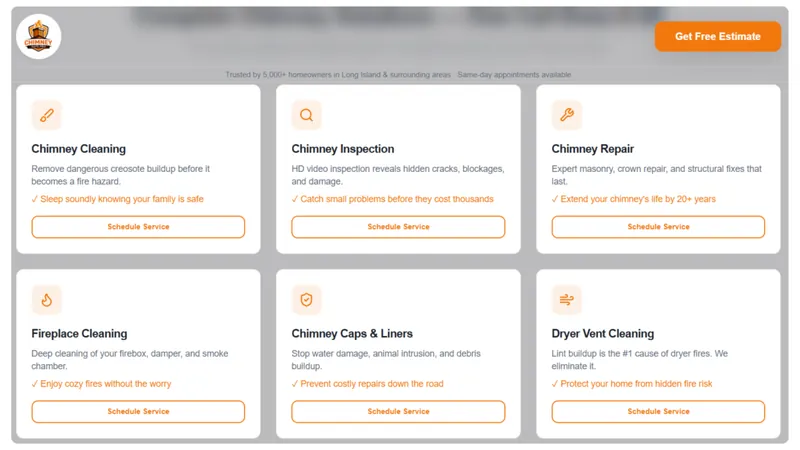
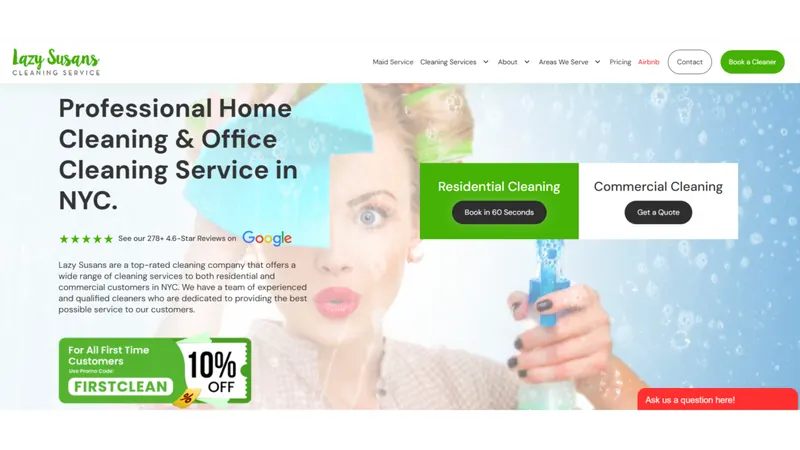
In the accounts I manage, negative keywords are ongoing work, not a one-time setup. For Chimney Safe Pro, I excluded DIY, product and informational searches to protect the budget and improve lead quality. For Lazy Susan's Cleaning Service, I continuously excluded informational and low-commercial-intent searches. In both cases, negatives worked alongside tight geo-targeting and conversion tracking on real leads. If you want to see how negatives fit into the rest of the account, read my guide to Google Ads for cleaning businesses.
Final thoughts
Negative keywords will not make a weak offer convert, but they stop you paying for searches that were never going to book. Start with shared lists for jobs, DIY, products and training, then refine weekly from your search terms report. If you want this handled for you, see my Google Ads management for cleaning and home service businesses, or book a free tracking audit.